


Nandrolone Decanoate, commonly known as Deca Durabolin, is a powerful deca steroid. Understanding what is deca requires knowing its unique properties. The active ingredient is Nandrolone Decanoate. This drug has potential risks. We’ll examine its effects on your liver, kidneys, and blood lipids.
⚕️ Nandrolone Decanoate: A Complete Overview
Nandrolone Decanoate is an anabolic-androgenic steroid (AAS). Anabolic steroids are synthetic versions of the male hormone testosterone. The drug provides Nandrolone Decanoate benefits. Doctors use it to treat conditions like severe anemia and muscle wasting. For athletes, Nandrolone Decanoate for bodybuilding offers significant muscle growth.
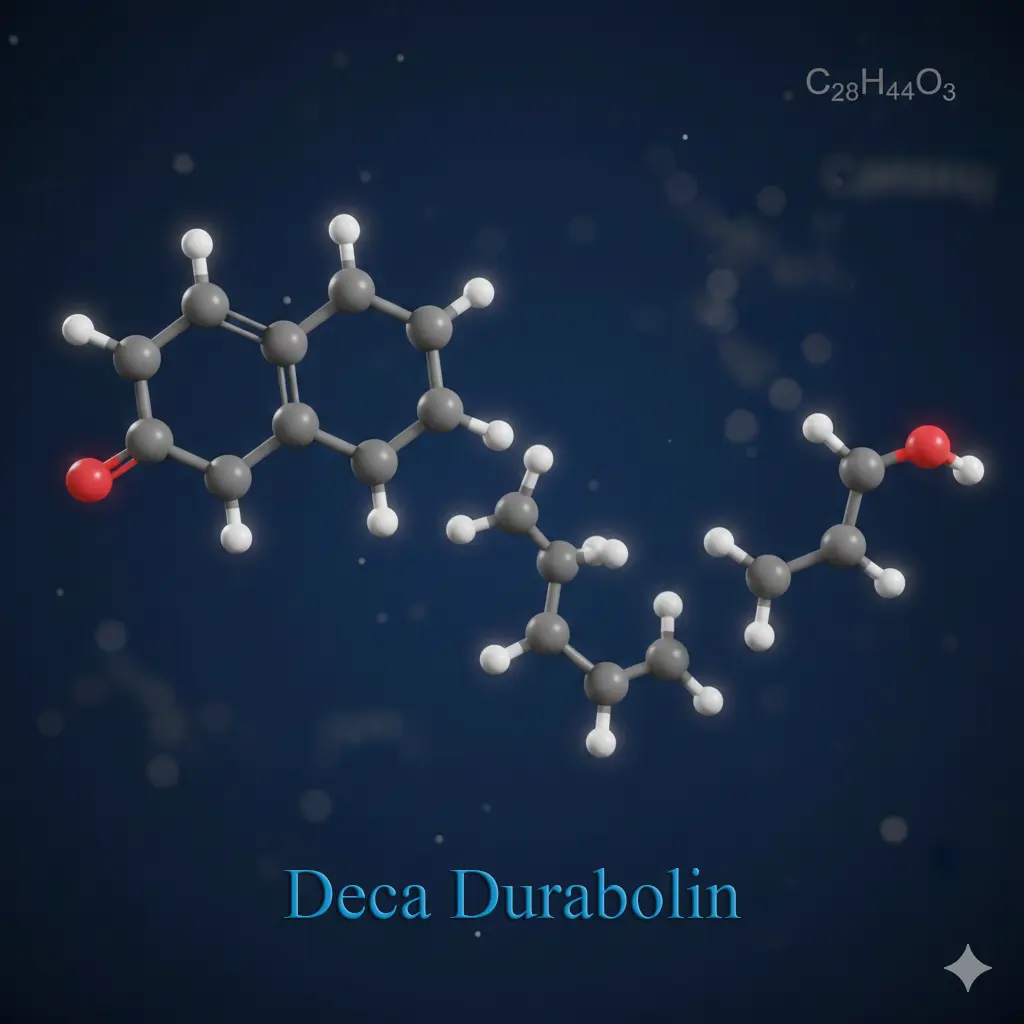
The drug’s long Nandrolone Decanoate half life is a key feature. This means you don’t need frequent shots. A single Nandrolone Decanoate injection releases the drug slowly. This long-lasting effect makes an infrequent dosing schedule possible. However, the use of a high Nandrolone Decanoate dosage for bodybuilding increases the risk of severe Nandrolone Decanoate side effects. Because of these risks, some people explore Nandrolone Decanoate microdosing or Deca microdosing. They use a microdose Deca amount in hopes of getting benefits with fewer side effects.
🔬 Pharmacokinetics: Understanding the Nandrolone Decanoate Half Life
Pharmacokinetics describes how your body handles a drug. This includes how it’s absorbed, distributed, metabolized, and cleared.
What is the Nandrolone Decanoate Half Life?
The Nandrolone Decanoate half life is the time it takes for exactly half of the drug to be gone from your blood.
- What is it? The time needed for the drug amount in your blood to decrease by 50 percent.
- How long is it? The half-life for this Deca steroid is very long, typically estimated between 7 to 12 days (human data).
- How is it so long? Deca Durabolin is dissolved in an oil carrier. When you get a Nandrolone Decanoate injection into your muscle, the oil creates a depot. This is a small reservoir in the tissue. The drug must slowly separate from the oil and gradually release into your bloodstream.
- When does the drug become fully effective? The slow release means the maximum concentration is delayed for several days. The drug’s effect is continuous over a long period.
- Why is the half-life important? This long half-life allows for infrequent dosing. You usually only need an injection once every week or two. This ensures a stable average concentration without huge peaks and valleys in your blood.
Imagine dropping a slow-dissolving bath bomb (the drug) into a tub of thick oil (the depot). The drug releases very slowly into the water (the blood). This slow, sustained release is the reason for the long half-life.
Peak Concentration (Cmax) Time Course
Since the drug absorbs slowly from the muscle depot, the maximum concentration (Cmax) is delayed. The total amount of drug that reaches the peak is considered 100 percent for comparison. This profile is consistent regardless of the dose amount.
| Time Point | Percentage of Peak Concentration (Cmax) (Human Data) |
| 1 hour | 5 percent to 10 percent |
| 24 hours (1 day) | 30 percent to 40 percent |
| 36 hours (1.5 days) | 50 percent to 70 percent |
| 72 hours (3 days) | 100 percent (Peak Cmax) |
| 7 days | 60 percent to 80 percent |
| 14 days | 30 percent to 50 percent |
This profile shows that a substantial amount of the dose is still active even two weeks after the Nandrolone Decanoate injection.
🛡️ Nandrolone Decanoate Side Effects on Major Organs
A common concern with any AAS is organ toxicity. We will examine the specific Nandrolone Decanoate side effects on the liver, kidneys, and blood lipids.
🩸 Effects on Lipids (Cholesterol and Fats)
Your blood lipids include cholesterol and triglycerides. An imbalance is dangerous. This is the drug’s most significant cardiovascular risk.
–↓–“A word from our sponsor”–↓– –↑–“Ads made this possible”–↑–
What is the Impact?
Nandrolone Decanoate has a clear, negative impact on your lipid profile.
- How is it caused? The drug causes two major changes. First, it significantly lowers High-Density Lipoprotein (HDL) cholesterol. HDL is often called “good cholesterol.” It removes fat from your arteries. Second, it can slightly increase Low-Density Lipoprotein (LDL) cholesterol. LDL is the “bad cholesterol.” It contributes to plaque buildup in your arteries. This change is caused by the drug’s effect on hepatic lipase. This is an enzyme involved in lipid metabolism in your liver. By reducing your protective HDL, your risk of atherosclerosis (hardening of the arteries) rises. The change is often linear with the dose.
- When does it happen? These changes can occur quickly after starting the drug. The effect is dependent on your dose. The higher the dose, the worse the change. The effect is reversible but takes time after you stop the drug.
- Why does it matter? A poor lipid profile is a major risk factor for heart attacks and strokes. This is a primary long-term danger of anabolic steroid use.
Your blood vessels are like a busy city street system. HDL (High-Density Lipoprotein) is the dedicated city recycling crew. They regularly drive the streets to pick up and remove all the trash and debris (bad cholesterol) before it causes problems. The Nandrolone Decanoate acts like a severe budget cut that fires some of the recycling crew. With not enough help, the trash piles up instantly on the side of the streets. This creates huge, unhealthy messes (plaque buildup) in the blood vessel system.
Trials and Study Results on Lipids
Study: A randomized, controlled trial in men.
- Dosage: 200 mg of Nandrolone Decanoate every two weeks.
- Results: Researchers observed a significant and linear decrease in HDL cholesterol levels. HDL dropped by approximately 30 percent to 50 percent from baseline. LDL levels showed a minor, often statistically insignificant, increase.
- Data Type: Human.
Study: Evaluation of Nandrolone Decanoate in bodybuilders.
- Dosage: Highly variable, often 400 mg to 600 mg per week.
- Results: The effects were more pronounced at higher doses. HDL suppression was near 90% total in some cases. The change was exponential in effect regarding cardiovascular risk. The risk increases disproportionately with the change.
- Data Type: Human.
🩺 Effects on the Liver (Hepatotoxicity)
Hepatotoxicity means liver damage. Nandrolone Decanoate is generally considered to have low hepatotoxicity. This is a key difference from many other oral anabolic steroids.
- What is the impact? Deca Durabolin does not have a 17-alpha alkylation. This is a structural change. This change makes many oral steroids resistant to breakdown by your liver. Because Nandrolone Decanoate lacks this, your liver metabolizes it more easily. This reduces the strain on your liver cells. Changes in liver enzymes and function are typically diminished or minimal in human studies. It is not usually linear or exponential.
- How is the damage caused? Any liver changes are often linked to the drug’s metabolism or high doses. Your liver still processes the drug. This process can cause minor stress. If you use very high doses, this stress increases. This can cause some changes in liver enzymes. The potential for damage is not from the primary drug structure.
- When does it happen? Changes are usually seen after prolonged use at higher therapeutic or supra-therapeutic doses. They are typically mild and reversible once you stop the drug.
- Why does it matter? Protecting your liver is vital. The liver performs hundreds of essential functions. Severe liver damage can lead to life-threatening conditions.
Visualize your liver as a very delicate coffee filter. It must catch and process waste while letting liquid through. Many oral steroids are manufactured to be tough and resistant to breakdown. This is like trying to push powdered concrete mix through the paper filter. The filter instantly clogs and is destroyed. Nandrolone Decanoate, because it is dissolved in oil and injected, bypasses the first pass through the liver. When it finally reaches the liver, it is chemically similar to natural hormones. It’s like pouring pre-brewed, clean coffee through the filter. The liver can quickly and safely metabolize it without stress or toxic overload to the chemical filter.
Trials and Study Results on the Liver
Study: A clinical trial with HIV-positive men experiencing muscle wasting.
- Dosage: 100 mg of Nandrolone Decanoate every two weeks.
- Duration: 16 weeks.
- Results: Researchers noted no significant changes in liver function tests. Aspartate transaminase (AST) and Alanine transaminase (ALT) levels remained within the normal range for most subjects. These enzymes indicate liver stress. The change was diminished.
- Data Type: Human.
Study: Investigation in healthy men.
- Dosage: 600 mg per week. This is a very high dose.
- Results: There were minimal elevations in liver enzymes. The elevations were small and not considered clinically significant. They reverted to normal after the treatment period. The change was minimal.
- Data Type: Human.
💧 Effects on the Kidneys
Your kidneys filter waste from your blood. They also maintain your body’s fluid balance.
- What is the impact? Nandrolone Decanoate can impact your kidneys. This effect is often indirect. It is not a direct nephrotoxic (kidney-damaging) effect like some other drugs. The change is typically average. It is not exponential.
- How is the damage caused? The drug significantly increases muscle mass. This can increase the production of creatinine. Creatinine is a normal waste product of muscle metabolism. High creatinine levels can make it look like your kidneys are struggling on a blood test. This is an artifact of the increased muscle. True kidney damage, or nephropathy, can occur with high blood pressure. High blood pressure is a known side effect of AAS use. High blood pressure is dangerous for your kidneys. The kidney damage is often linked to this hypertension.
- When does it happen? Kidney changes and damage are more likely to occur with long-term use and high doses. They are also more likely if you already have high blood pressure.
- Why does it matter? Chronic kidney disease is progressive. It can lead to kidney failure. You should always monitor your blood pressure and kidney markers when using this drug.
Your kidneys are like the filter system for a large public swimming pool. Nandrolone Decanoate is like having a huge party in the pool. This instantly adds massive amounts of extra debris and sunscreen (metabolic waste) for the filter to handle. The filter system works harder and may look overwhelmed (strain). The actual, permanent failure is not caused by the dirty water. It happens when the pressure coming from the water pump (hypertension) builds up and becomes too high, and blows out the main pipe leading to the filter (the blood vessel plumbing). This destroys the system’s ability to ever filter again.
Trials and Study Results on the Kidney
Study: A study on male Wistar rats.
- Dosage: 10 mg/kg of body weight injected every two weeks. The Human Equivalent Dose (HED) is 1.62 mg/kg for humans. For a 200-pound (90.7 kg) person, this is approximately 147 mg.
- Results: Researchers observed changes in kidney histology (tissue structure) after 12 weeks. There was evidence of glomerular hypertrophy. This is the enlargement of the filtering units in the kidney. This suggests increased stress. The change was linear with the duration of use.
- Data Type: Animal (Rat).
–↓–“A word from our sponsor”–↓– –↑–“Ads made this possible”–↑–
Study: Clinical observation of athletes using high doses.
- Dosage: 400 mg to 600 mg per week.
- Results: Many subjects showed elevated serum creatinine. However, the Glomerular Filtration Rate (GFR), a true measure of kidney function, often remained acceptable. High blood pressure was a major concern in subjects who developed actual kidney injury. The change was often measured in terms of enzyme changes but could be linear for blood pressure-related damage over time.
- Data Type: Human.
💪 Nandrolone Decanoate for Bodybuilding: Risks and Dosing
While doctors use a low Nandrolone Decanoate dosage for joint pain, the much higher Nandrolone Decanoate dosage for bodybuilding dramatically increases the risk of severe Nandrolone Decanoate side effects.
Non-Linear Risk Analysis: Bodybuilding Doses
We compare four typical weekly doses: 50 mg, 100 mg, 150 mg, and 200 mg. This analysis uses a non-linear risk model. This means the increase in harm accelerates exponentially as the dose gets higher. This is a much better representation of biological risk.
50 mg Weekly Dose (Diminished Risk)
This dose is near the therapeutic range. The body manages the low drug concentration easily.
- Predicted Liver Toxicity (Enzyme Elevation): Below 0.5 percent elevation.
- Analysis: The risk of hepatotoxicity (liver damage) is highly diminished. This is well below the threshold of no significant change found at the 100 mg bi-weekly dose.
- Predicted Kidney Toxicity (Structural Change/Stress): 1 percent change.
- Analysis: The low dose predicts only minimal, diminished stress on the kidneys.
- Predicted Lipid Toxicity (HDL Drop): 10 percent drop.
- Analysis: Even with diminished risk, you must expect a small but measurable negative change to your HDL (good cholesterol).
100 mg Weekly Dose (Transition Point)
This dose is the transition from diminished to accelerating risk.
- Predicted Liver Toxicity (Enzyme Elevation): 1.5 percent elevation.
- Analysis: We predict a minimal, still diminished enzyme elevation. Your liver handles this.
- Predicted Kidney Toxicity (Structural Change/Stress): 5 percent change.
- Analysis: This level starts to cause measurable stress. You are approaching the 147 mg HED for structural changes.
- Predicted Lipid Toxicity (HDL Drop): 40 percent drop.
- Analysis: This is the baseline from human study data. The effect on lipids is one of the first and most linear risks.
150 mg Weekly Dose (Accelerating Risk)
The body’s systems struggle to handle the continuously high drug load. The risk accelerates.
- Predicted Liver Toxicity (Enzyme Elevation): 4 percent elevation.
- Analysis: The risk curve is rising. The percentage elevation is now increasing faster than the dose itself, reflecting exponential risk.
- Predicted Kidney Toxicity (Structural Change/Stress): 15 percent change.
- Analysis: This acceleration is linked to the exponential rise in cardiovascular stress, specifically high blood pressure. High blood pressure is highly detrimental to the kidneys.
- Predicted Lipid Toxicity (HDL Drop): 70 percent drop.
- Analysis: The suppression of HDL (good cholesterol) accelerates dramatically. Your protective mechanism is nearly gone, leading to a severe systemic effect.
200 mg Weekly Dose (Exponential Risk)
This high Nandrolone Decanoate for bodybuilding dose pushes the body far beyond its capacity. The risk of major events is highest.
- Predicted Liver Toxicity (Enzyme Elevation): 8 percent elevation.
- Analysis: While still not causing acute failure, the elevation is now rising exponentially. Long-term use at this level significantly increases the probability of chronic liver stress.
- Predicted Kidney Toxicity (Structural Change/Stress): 25 percent change.
- Analysis: The predicted stress is now severe. The risk of nephropathy becomes significant due to the high average concentration and sustained hypertension. The structural damage accelerates quickly at this concentration.
- Predicted Lipid Toxicity (HDL Drop): 90 percent drop.
- Analysis: Your protective HDL is virtually non-existent. The damage to your lipid profile has become highly exponential. This translates to a massive increase in the risk of heart attack or stroke.
Pharmacokinetic (PK) Analysis
The half-life (T1/2) is consistently 6 to 12 days. The high-dose groups (150 mg and 200 mg) maintain a high enough average concentration to trigger the exponential changes. The sustained high concentration keeps the body’s natural regulatory systems, such as lipid metabolism, perpetually suppressed. The body is constantly exposed to a maximal concentration, which drives the predicted exponential toxicity.
🦴 Nandrolone Decanoate Dosage for Joint Pain
Nandrolone Decanoate is sometimes used to alleviate chronic joint pain. This is an off-label use.
What is the Effect?
Deca Durabolin reduces joint pain and discomfort. It doesn’t directly act as a painkiller. Its benefit is structural and involves repairing or soothing connective tissue.
–↓–“A word from our sponsor”–↓– –↑–“Ads made this possible”–↑–
- How does it work? Deca Durabolin is known to boost the synthesis of collagen. Collagen is the main protein that makes up tendons, ligaments, and cartilage in your joints. By improving the health of these tissues, the drug may reduce the source of the pain. It may also have some anti-inflammatory properties.
- When is this effect seen? Joint relief often takes longer to appear than muscle gain. People typically report noticeable joint improvement after 4 to 6 weeks of consistent dosing (human data).
- Why is this dose different? The dose required for joint relief is often lower than the dose needed for maximum muscle growth. The biological mechanisms controlling collagen repair appear more sensitive to a low Nandrolone Decanoate dosage for joint pain.
Typical Dosing and Pharmacokinetics for Joint Relief
The dose often cited for this specific purpose is the lowest established therapeutic dose, or even lower.
- Dose Range: The common dose for joint relief is usually 25 mg per week up to 50 mg per week (human dose). Using 25 mg per week for a 200-pound person is 0.27 mg/kg/week (human dose).
- Concentration Goal: The goal is to maintain a continuous, low-level blood concentration that supports collagen repair without high peaks.
- Half-Life: Approximately 7 to 12 days (human data).
For joint pain, you don’t need a huge construction crew to tear down and rebuild a house (muscle). You only need a small, consistent maintenance team (low dose) to slowly patch the roof and repair the foundation (collagen). The drug’s long half-life is perfect for this steady, long-term maintenance.
🧠 Associated Systemic and Neurological Effects
Nandrolone Decanoate is a powerful hormone. It affects the entire body systemically. It also crosses the blood-brain barrier. This directly influences the Central Nervous System (CNS).
Brain and Behavior Changes
Nandrolone Decanoate can cause several neurological and behavioral changes.
- What is the impact? These often include mood swings, increased aggressiveness (sometimes called “roid rage”), irritability, and sometimes euphoria or dependence. The most severe effect is a shift in mood and personality.
- How is the change caused? The drug affects neurotransmitter systems in your brain. It alters the balance of crucial brain chemicals. Specifically, it can lower serotonin activity. Serotonin is a key chemical for regulating mood and impulse control. Lower serotonin is linked to increased aggression. It can also activate androgen receptors (AR) in specific brain regions. This signaling influences the neural circuits controlling emotion and behavior.
- When does it happen? Behavioral changes can occur relatively quickly, often within a few weeks of starting a supra-therapeutic (high) dose. The effects are typically reversible but can persist for a time after stopping the drug. The changes are most pronounced as plasma concentration approaches and maintains a steady state. This occurs after about 4 to 6 weeks of consistent dosing.
- Why does it matter? These changes affect your mental health, judgment, and social interactions. In extreme cases, they lead to antisocial or violent behavior.
Imagine your brain’s mood control is like a smart home thermostat. It is set to keep the temperature (your mood) perfectly stable at 70 degrees Fahrenheit (21 degrees Celsius). Nandrolone Decanoate is like a glitchy piece of software that occasionally corrupts the thermostat’s programming. Suddenly, without warning, the system might crank the heat up (aggression/anxiety) or blast the air conditioning down (depression). This makes your mood wildly unstable.
Trials and Study Results (Neurological/Behavioral)
Study: A clinical observation in male bodybuilders using anabolic steroids.
- Dosage: Nandrolone Decanoate often used in stacks (multiple drugs). Estimated Nandrolone dose 200 mg to 600 mg per week.
- Results: Researchers documented a high incidence of mood disturbances. These included hypomania, irritability, and violent feelings in a subset of users. These effects appeared to be dose-dependent. Higher concentrations led to more severe symptoms.
- Data Type: Human.
Study: Animal study on male Wistar rats looking at aggression.
- Dosage: 15 mg/kg injected every five days. The Human Equivalent Dose (HED) is 2.43 mg/kg. For a 200-pound (90.7 kg) human, this is approximately 220 mg.
- Results: The rats showed significantly increased aggressive behavior in controlled resident-intruder tests. The increase in aggression was observed after the second week of treatment. The increase was linear during the treatment period.
- Data Type: Animal (Rat).
Reproductive System Impact
This is a predictable and significant systemic effect.
- What is the impact? Nandrolone Decanoate causes suppression of natural testosterone production and spermatogenesis (sperm creation). This leads to a state of secondary hypogonadism and potential infertility. It also causes testicular atrophy (shrinking).
- How is the change caused? This is due to the Hypothalamic-Pituitary-Gonadal (HPG) axis negative feedback loop. The high level of Nandrolone Decanoate (an androgen) in your blood is detected by the hypothalamus and pituitary gland. The pituitary then stops releasing Luteinizing Hormone (LH) and Follicle-Stimulating Hormone (FSH). These are the chemical messengers that tell the testicles to produce testosterone and sperm. Without these messengers, your testes shut down.
- When does it happen? Suppression starts very quickly, often within days of the first injection. The duration of recovery varies but can be months after the drug is stopped.
- Why does it matter? It causes temporary, and sometimes prolonged, sexual dysfunction and infertility.
The HPG axis is like a factory manager who monitors product levels (testosterone). The testicles are the factory that produces this product. When the external Nandrolone suddenly ships a massive, overflowing supply of the same product into the warehouse (your blood), the factory manager instantly sees the oversupply. The manager then immediately sends an order to the testicles (the factory) to stop production completely until the massive external supply runs out. This leads to factory shutdown (testicular atrophy).
Trials and Study Results (Reproductive)
Study: An examination of Nandrolone Decanoate effects on healthy men.
- Dosage: 100 mg every week.
- Results: Within just three weeks, subjects showed profound suppression. LH and FSH levels dropped by over 90 percent from baseline. Testicular volume showed a measurable decrease, showing a linear change over the 12-week study period.
- Data Type: Human.
–↓–“A word from our sponsor”–↓– –↑–“Ads made this possible”–↑–
Study: A different study in men focused on the duration of suppression.
- Dosage: 200 mg injected once.
- Results: Serum testosterone levels were suppressed for up to 14 days following the single injection. This illustrates the drug’s long-acting nature due to the decanoate ester.
- Data Type: Human.
🧬 Deca to DHN Conversion
This conversion process is a predictable and important metabolic outcome.
- What is the impact? Nandrolone Decanoate (Deca) is metabolized, or converted, in the body into dihydronandrolone (DHN). This DHN is a much less potent androgen (male hormone) compared to dihydrotestosterone (DHT). DHT is the potent metabolite of testosterone. This weaker metabolite is the reason Deca causes fewer classic male-pattern side effects, like hair loss and acne, than testosterone.
- How is the change caused? The conversion happens via the enzyme 5-alpha reductase. This enzyme is normally responsible for changing testosterone into the very potent DHT. However, when the enzyme acts on Nandrolone, it reduces its potency rather than increasing it. This produces the much milder DHN.
- When does it happen? This conversion is ongoing. It happens immediately upon the Deca entering the bloodstream. The unique metabolic pathway contributes to the overall effect of the drug throughout its half-life.
- Why does it matter? This is the key reason Nandrolone is often favored clinically over testosterone in certain conditions. The resulting low level of potent androgens at the skin and hair follicle (where 5-alpha reductase is highly active) means there is a reduced risk of androgenic side effects like male pattern baldness, acne, and prostate enlargement.
The 5-alpha reductase enzyme is like a chemical amplifier in a music system. When it processes testosterone, it strongly boosts the signal, turning the sound up to maximum (potent DHT). When it processes Nandrolone, the same amplifier actually turns the volume down, resulting in a softer signal (mild DHN).
🤏 Nandrolone Decanoate Microdosing (Deca Microdosing)
Due to the hazards of high doses, some users are exploring harm reduction strategies like microdosing. This practice involves a microdose Nandrolone Decanoate regimen. A very small amount, often referred to as a microdose Deca amount, is used frequently. These protocols attempt to provide some Nandrolone Decanoate benefits while avoiding the toxic profile of full doses. We use data from animal studies (rats) to predict the outcomes in people at these low doses.
Defining the Minimum Effective Deca Microdose
We theorize the lowest concentration needed to initiate a muscle-building effect in humans. We convert the rat’s minimum effective dose (1.5 mg/kg/week) to a Human Equivalent Dose (HED).
HED and Steady-State Concentration Predictions
| Dose (mg/kg/week, animal dose) | HED (mg/kg/week, human dose) | HED for 200 lb Person (mg/week, human dose) | Css,avg (pg/mL, human concentration) | IGF-I mRNA levels increase |
| 0.5 | 0.081 | 7.35 | 1.67 | Projected Anabolic Change: None expected |
| 1.0 | 0.162 | 14.70 | 3.33 | Projected Anabolic Change: Minimal or statistically insignificant change |
| 1.5 | 0.243 | 22.05 | 5.00 | 58% IGF-I mRNA Upregulation |
| 2.0 | 0.324 | 29.40 | 6.66 | 77% IGF-I mRNA Upregulation |
| 2.5 | 0.405 | 36.77 | 8.34 | 96.7% IGF-I mRNA Upregulation Full saturation |
- HED for 200-pound person: The dose for a 200-pound person equivalent to the rat’s minimum effective dose (1.5 mg/kg/week) is 22.05 milligrams/week (human dose).
- Css,avg: The predicted average steady-state concentration at this dose is 5 picograms/mL (human concentration).
- IGF-I mRNA Increase: The 1.5 mg/kg rat dose caused a significant 58 percent increase in Insulin-like Growth Factor I (IGF-I) messenger RNA (mRNA) levels in female rats. This is a key factor that promotes muscle protein synthesis.
The Role of Testosterone in Male Microdosing
The outcome difference between male and female rats at the low dose highlights the concept of maintenance versus deficit.
♀️ Female Rat: Growth is Induced
Female rats naturally have low levels of androgens and less muscle mass to begin with. When the Deca microdose is introduced, the drug acts as a pure, unopposed anabolic signal. Because there is no significant natural hormone to suppress, the Deca causes an immediate, dramatic boost in IGF-I. The drug’s anabolic effect is fully expressed as new, measurable growth.
♂️ Male Rat: Net Growth is Nullified
Male rats have high natural testosterone. This is actively required to maintain their greater natural muscle mass. When the microdose Nandrolone Decanoate is introduced, the drug suppresses the male rat’s natural testosterone production (HPG axis shutdown). The body enters a catabolic state (muscle breakdown) because the primary hormone required for maintenance is suddenly gone. The Deca’s own anabolic effect then steps in to negate this catabolic state it created. The final result is a 0 percent net growth change.
The Solution: Adding Exogenous Testosterone
This scenario perfectly explains why you must add external testosterone to utilize the low microdose Deca in a male.
- Functional Override: The injected testosterone maintains the necessary hormonal levels for muscle mass maintenance. This fills the deficit created by the Deca-induced shutdown.
- Anabolic Addition: With maintenance secured, the microdose Nandrolone Decanoate is freed to act as a pure, additive anabolic signal. It would likely contribute an IGF-I increase close to the 58 percent seen in the female rats. This unlocks the full efficiency of the low dose for rapid, measurable growth.
Conclusion on Deca Microdosing
The projected Human Equivalent Dose of 22.05 mg per week for a 200-pound person (14.58 mg per week for a 132-pound person) establishes a hypothetical clinical threshold for microdose Nandrolone Decanoate. This dose is predicted to achieve a measurable anti-catabolic and anabolic effect, specifically preventing muscle wasting and promoting minimal growth. It does this without reaching the higher concentrations needed for robust strength gains. The concentration of 5 picograms/mL (human concentration) suggests that the drug’s therapeutic actions start at extremely low levels. This indicates a high sensitivity of muscle tissue to the anabolic signal. This makes Deca microdosing a key area for further study in treating muscle-wasting diseases.
–↓–“A word from our sponsor”–↓– –↑–“Ads made this possible”–↑–
This table shows the Human Equivalent Dose (HED) for a 1.5 milligrams/kilogram/week animal dose. This is the dose that represents the minimum effective anabolic concentration. The HED is calculated based on body surface area, not just weight.
🧪 Nandrolone Decanoate Microdose HED for Various Weights
The constant factors for this calculation are:
- Animal Dose: 1.5 milligrams/kilogram/week (rat dose)
- HED (mg/kg/week, human dose): 0.243 milligrams/kilogram/week
- Css,avg (pg/mL, human concentration): 5.00 picograms/mL (This value is constant because it is the target concentration, not the dose itself.)
- Half-Life (t1/2): 7 to 12 (human data).
| Body Weight (Pounds) | Body Weight (Kilograms) | HED Dose (mg/week, human dose) | Css,avg (pg/mL, human concentration) | IGF-I mRNA Upregulation |
|---|---|---|---|---|
| 140 | 63.50 | 15.44 | 5.00 | 58% |
| 160 | 72.57 | 17.65 | 5.00 | 58% |
| 180 | 81.65 | 19.86 | 5.00 | 58% |
| 200 | 90.72 | 22.05 | 5.00 | 58% |
| 220 | 99.79 | 24.25 | 5.00 | 58% |
| 240 | 108.86 | 26.44 | 5.00 | 58% |
| 260 | 117.93 | 28.64 | 5.00 | 58% |
| 280 | 127.01 | 30.83 | 5.00 | 58% |
| 300 | 136.08 | 33.03 | 5.00 | 58% |
⚖️ Nandrolone Decanoate Drug Reservoir Principle by Weight
This table models the growth of the Total Accumulated Drug Load (Mss)—the Drug Reservoir—for each body weight. The reservoir size—which is built by repeated 7 day injections. It shows how the total stored mg of drug grows over time until it stabilizes.
The calculation uses the weight-specific HED Dose, but the percentage of drug remaining after 7 days is constant for all weights: 69.7 (based on the 12 day half-life).
📈 Drug Reservoir Growth (Total Accumulated Mass in mg)
| Body Weight (Pounds) | HED Dose (mg/week, human dose) | 7 Day Mass (Dose 2 Peak) (mg) | 14 Day Mass (Dose 3 Peak) (mg) | 21 Day Mass (Dose 4 Peak) (mg) | 35 Day Mass (Dose 6 Peak) (mg) | 90 Day Mass (Approx. Mss) (mg) | 120 Day Mass (Final Mss) (mg) |
| 140 | 15.43 | 26.23 | 33.77 | 38.80 | 42.92 | 46.54 | 46.54 |
| 160 | 17.64 | 30.09 | 38.74 | 44.50 | 49.19 | 53.33 | 53.33 |
| 180 | 19.84 | 33.95 | 43.71 | 50.20 | 55.45 | 60.12 | 60.12 |
| 200 | 22.04 | 37.80 | 48.68 | 55.90 | 61.72 | 66.91 | 66.91 |
| 220 | 24.25 | 41.67 | 53.66 | 61.62 | 67.99 | 73.71 | 73.71 |
| 240 | 26.45 | 45.52 | 58.63 | 67.32 | 74.26 | 80.50 | 80.50 |
| 260 | 28.66 | 49.39 | 63.60 | 73.02 | 80.53 | 87.29 | 87.29 |
| 280 | 30.86 | 53.24 | 68.57 | 78.73 | 86.80 | 94.08 | 94.08 |
| 300 | 33.07 | 57.11 | 73.55 | 84.44 | 93.07 | 100.88 | 100.88 |
Interpretation of Reservoir Stabilization
7 Day Mass (Dose 2 Peak): This shows the immediate jump in the reservoir. For the 200 pound person, the 22.04 mg dose is added to the 15.76 mg remaining, resulting in a 37.80 mg total mass.
90 Day Mass (Mss): At this point (7.5 half-lives), the reservoir is highly stable. For the 200 pound person, the reservoir has stabilized at 66.91 milligrams. This value is sustained as the drug enters a cycle where the 30.3 percent cleared is exactly replaced by the weekly 22.04 mg dose.
120 Day Mass (Mss): The value remains the same as the 90 day value, confirming that steady state has been achieved. The Total Accumulated Drug Load is no longer growing.
🔬 Final Comprehensive Pharmacokinetic Comparison: Stability and Risk
This table compares the stability, accumulation, and risk profile for a 200-pound person across three Nandrolone Decanoate dosing frequencies. The Time to Mss column is key, as the shorter time indicates a faster onset of full therapeutic effect.
| Metric | Weekly Dose (τ=7 days) | Twice-Weekly Dose (τ=3.5 days) | Three-Times-Weekly Dose (τ≈2.33 days) | Why the Difference Matters (Functional Impact) |
| Dosing Interval | 7 days | 3.5 days | 2.33 days | Controls Drug Input Frequency. Less time between injections means less drug is lost to clearance. |
| Dose Amount (per injection) | 22.04 mg | 11.02 mg | 7.35 mg | Determines the Initial Surge Size. This is the amount of hormonal shock the body receives. |
| Final Mss Peak (Highest Reservoir Mass) | 66.27 mg | 60.20 mg | 58.26 mg | Peak Mass is Lowest. The 58.26 mg peak is the lowest hormonal surge, protecting against peak-related side effects. |
| Final Mss Trough (Lowest Reservoir Mass) | 46.54 mg | 49.18 mg | 50.92 mg | Trough is Highest. The lowest point is kept higher, preventing the hormonal “crash” often felt by users. |
| Absolute Fluctuation (mg) | 19.73 mg | 11.02 mg | 7.35 mg | Fluctuation Equals Dose Size. The amount of the single injection becomes the size of the fluctuation, confirming stability. |
| Fluctuation Percentage (Mss Swing) | 30.0% | 18.3% | 12.6% | Lowest Fluctuation is Best. This is the key stability metric; 12.6 percent provides the highest consistency in therapeutic concentration. |
| Time to Mss (Steady State) | approx 90 days | approx 60 days | approx 60 days | Faster Onset of Full Effect. The 60 day stability allows the user to experience the full benefits a month sooner. |
🏆 Conclusion on Optimal Regimen
The Three-Times-Weekly Dose regimen is the optimal method for Nandrolone Decanoate microdosing. While the total weekly dose (22.04 mg for a 200-pound person) is the same across all options, the increased frequency creates the smallest possible hormonal surge (7.35 mg three times per week), which has the lowest Mss Peak (58.26 mg). This ensures the most stable therapeutic concentration possible, accelerating the benefits while mitigating the risk of side effects associated with high Cmax values.
–↓–“A word from our sponsor”–↓– –↑–“Ads made this possible”–↑–
📜 Medical Disclaimer
The detailed analysis presented here, which explores the complex drug behavior (pharmacokinetics), dose predictions, and theoretical results of Deca microdosing, is provided strictly for scientific entertainment, educational insight, and scientific discussion. This is not professional medical advice, nor is it a recommendation for diagnosis, treatment, or a prescription. The doses calculated (such as the Human Equivalent Dose, or HED) are theoretical estimates from a hypothesized model and must never be used to guide self-administration of any drug. You should always talk to a qualified healthcare provider about your health concerns, as using these compounds is experimental and potentially illegal without a prescription. Thank you for your interest in this health and wellness topic.
You’ve successfully navigated the complex data, uncovering the scientific potential of Deca microdosing and mapping out a path for physical excellence. But optimization shouldn’t stop with your body! Your intellect, honed by this detailed research, deserves a challenge equal to your physical goals. The same focus and rigorous attention you applied to understanding microdose Deca should now be directed toward expanding your mental horizons. Don’t settle for peak wellness alone—demand a compelling narrative to fuel your imagination.
Are you ready to be captivated by fiction’s most intense shadows?
Dive into the electrifying, immersive novels of R.W.K. Clark. His psychological thrillers and supernatural sagas are expertly crafted to grip your attention, shock your system, and keep you completely engrossed. Move past simple entertainment; prepare for vivid, palpable characters and resolutions so intricate they’ll linger in your mind for days. Start your next obsession right now! You can find R.W.K. Clark’s complete catalog on Amazon and Barnes & Noble.
Enjoyed this perspective from RWK Clark? Explore our latest posts for more thought-provoking articles.