


The MOTS-c peptide is an emerging mitochondrial-derived signaling molecule whose therapeutic potential, including microdosing its complex MOTS-c dosage and protocol, must be understood alongside its reported MOTS-c side effects and profound MOTS-c benefits for metabolism and longevity.
✨MOTS-c: The Master Regulator of Metabolism, Muscle, and Longevity
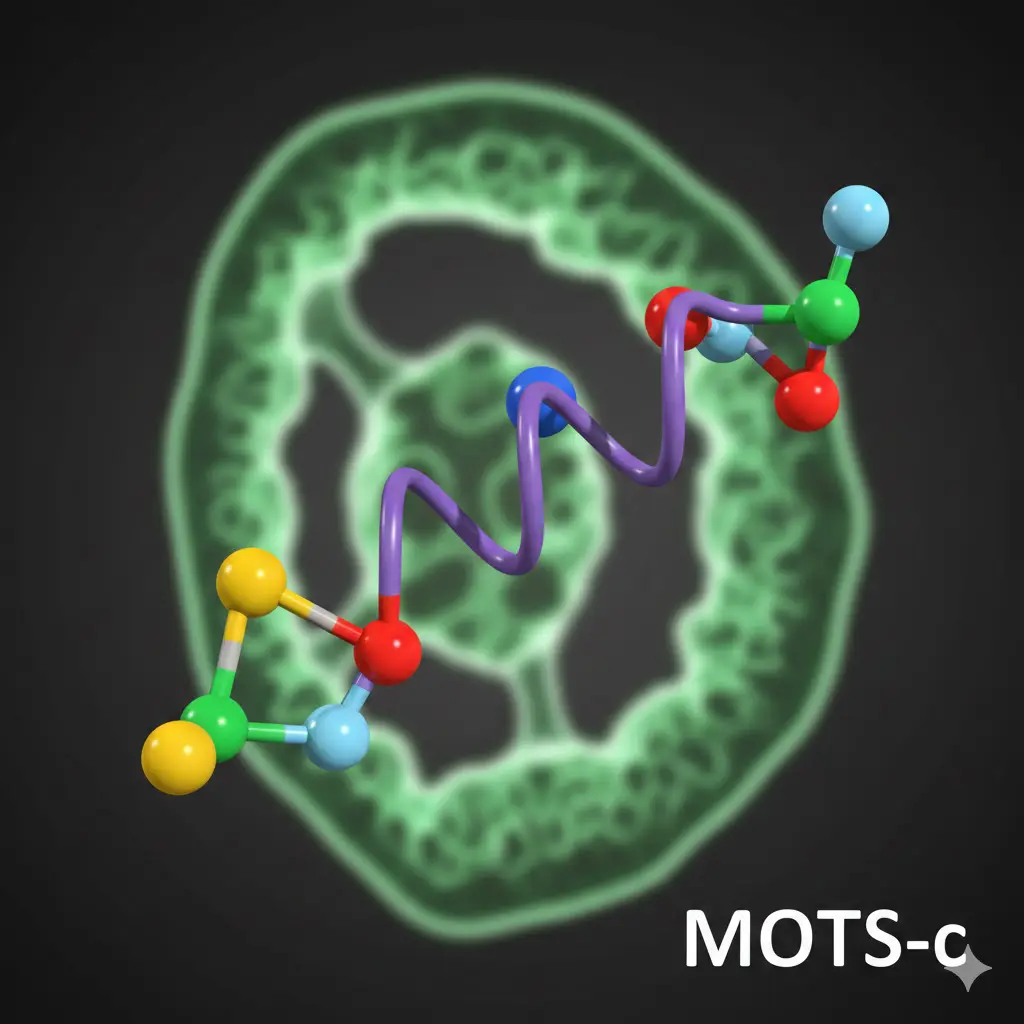
You’re exploring a breakthrough in cellular science. Scientists found a powerful group of signaling molecules. They’re called mitochondrial-derived peptides (MDPs). These peptides are essential for keeping your body in balance. This state is known as systemic homeostasis.
The most studied MDP is MOTS-c. It stands for Mitochondrial ORF of the 12S rRNA Type-C. It’s a major controller of your metabolism and muscle health. The discovery confirms that the mitochondrial genome is a source of new, critical medicines and drug targets.
🔬 Peptide Structure and Essential Cellular Talk
MOTS-c is a tiny peptide. Its structure is short, only 16 amino acids long. It’s encoded by a small genetic section. This section is called a short open reading frame (sORF). This sORF resides inside the mitochondrial 12S rRNA gene. Your body makes this peptide endogenously in the cell’s main area, the cytosol. The peptide has a specific molecular weight of 2174.6 grams per mole (g/mol). When your cells are resting, MOTS-c stays outside the nucleus. It often sits near the mitochondria, the cell’s powerhouses.
The Critical Role of Mitonuclear Communication
MOTS-c is vital for mitonuclear communication. This is the direct conversation between your mitochondrial genes and your nuclear genes. Mitochondria function as your cell’s energy and stress centers. They use this communication pathway to inform the cell’s nucleus about the environment. The nucleus then adjusts its gene expression to adapt to changes.
This signaling changes based on your cell’s energy state. Although typically found outside the nucleus, MOTS-c rushes into the nucleus during metabolic stress. This nuclear move is dependent on activating a key energy sensor. That sensor is AMP-activated protein kinase (AMPK). This confirms MOTS-c is a crucial, energy-dependent signal. It controls a retrograde signaling axis. This means the health of your mitochondria directly dictates the cell’s overall gene program for metabolic adaptation.
How Over-Nutrition Causes Mitochondrial Stress
This critical process is known as nutrient overload. When you consume excess calories (overeating), especially sugars and fats, your body processes them rapidly. This action floods the mitochondria with substrates, like acetyl-CoA. These substrates overwhelm the energy pathways. The electron transport chain (ETC) becomes highly congested with electrons. This occurs continuously during chronic over-nutrition. The electron congestion causes them to back up. They react prematurely with oxygen. This generates excessive Reactive Oxygen Species (ROS), specifically superoxide. ROS are highly damaging free radicals. They damage mitochondrial DNA and cellular proteins. This damage leads to mitochondrial dysfunction. This dysfunction, in turn, is a key driver of diseases like insulin resistance.
A small caloric deficit is sufficient to trigger the protective metabolic processes because your body’s energy sensors, particularly AMPK, are exquisitely sensitive to even minor drops in the ATP-to-AMP ratio, which registers a shift from energy surplus to energy scarcity. By imposing only a slight restriction, you avoid the chronic nutrient overload that jams the mitochondrial electron transport chain and generates damaging ROS; instead, this subtle energy gap signals the cell to conserve resources and enhance metabolic efficiency, activating cellular stress-resistance pathways like autophagy and promoting mitochondrial quality control, thereby extending longevity pathways without invoking the negative stress responses associated with severe starvation.
The principle that a slight caloric deficit supports longevity is strongly validated by parallel studies in rodents, particularly those focusing on Methionine Restriction (MR); decades of research have shown that severe MR alone, without overall caloric restriction, extends rodent lifespan by up to 45 percent, demonstrating that the restriction of this specific, essential amino acid is a potent activator of longevity pathways, a finding that complements classic caloric restriction studies where a 20 to 40 percent reduction in total energy intake also consistently extends the lifespan of mice and rats by suppressing age-related diseases and improving mitochondrial function.
Vitamins and minerals usually do not cause mitochondrial stress. They are not energy substrates. They don’t carry the large calorie loads that clog the ETC. They act as cofactors and catalysts. They help enzymes work efficiently. They are consumed in very small amounts, such as in milligrams (mg) or micrograms. A good balance of these nutrients is actually protective.
💡 Core Pharmacodynamics: The AMPK Master Switch
MOTS-c creates its widespread benefits through specific metabolic actions. These events are focused on metabolic sensing and activation.
The Central Switch: AMPK Activation
MOTS-c primarily acts as a metabolic regulator. It promotes energy balance, or bioenergetic homeostasis. It achieves this mainly by activating the cellular energy sensor, AMPK. AMPK turns on when the cell senses low energy. By activating AMPK, MOTS-c coordinates how your cells handle glucose, mitochondria, and fat stores.
The Upstream Target: Methionine-Folate Cycle Modulation
MOTS-c targets and limits the methionine-folate cycle. This action restricts methionine metabolism. This restriction causes an indirect effect. It increases your cell’s levels of AICAR. AICAR is a natural molecule that mimics AMP. It’s a key upstream activator of AMPK.
By adjusting the methionine cycle to raise AICAR levels, MOTS-c activates AMPK indirectly. This is a huge clinical advantage. It avoids the liver toxicity often seen with direct drug-like AMPK activators (like Metformin). This upstream bypass is considered safer. It avoids disrupting the liver’s mitochondrial respiration entirely. The resulting increase in homocysteine is a necessary, transient consequence of this metabolic flux change, not the goal. The benefit of robust AMPK activation outweighs this minor temporary side effect.
–↓–“A word from our sponsor”–↓– –↑–“Ads made this possible”–↑–
Metformin Comparison
Metformin is a drug widely used for type 2 diabetes. It is a known AMPK activator. Metformin reduces blood glucose by partially inhibiting Complex I of the mitochondrial ETC. The main concern with metformin is lactic acidosis. This is a rare, serious condition. Lactic acidosis almost exclusively occurs when the patient has kidney failure. The advantage of MOTS-c is that its method of AMPK activation works upstream. It modulates the folate-methionine cycle to raise AICAR. This bypass avoids the risks associated with mitochondrial ETC inhibition.
🏃 Metabolic Power: Exercise Mimetic and Anti-Catabolism
MOTS-c improves how you use energy sources. This is especially true in your muscles.
Targeted Glucose Metabolism and Muscle
Your skeletal muscle is the main target for MOTS-c. It significantly improves insulin sensitivity there. Giving a subject exogenous MOTS-c improves how fast insulin can stimulate glucose processing. This direct muscle benefit makes it a strong potential treatment for insulin resistance.
MOTS-c also fights lipotoxicity. This is fat accumulation inside the muscle. It enhances metabolic flexibility. This action prevents the pathological accumulation of fat. It does not cause general weight loss in healthy states. Its primary role is metabolic correction.
Anti-Catabolism and Muscle Dynamics
MOTS-c has powerful anti-catabolic properties. This is crucial for maintaining muscle mass. It is a novel physiological myostatin inhibitor. Myostatin is a major brake on muscle growth. MOTS-c treatment demonstrably decreases systemic levels of myostatin. It effectively prevents muscle wasting in mice fed a high-fat diet.
The anti-catabolic action is highly complex. It involves the CK2-PTEN-mTORC2-AKT-FOXO1 cascade. This series of steps activates the PI3K-AKT pathway. This pathway promotes cell survival and growth. Ultimately, this cascade forces the transcription factor FOXO1 out of the nucleus. Since FOXO1 activates muscle-wasting genes, forcing it out shuts down catabolic signals.
MOTS-c and Myostatin Inhibition
MOTS-c is an indirect myostatin inhibitor. It doesn’t bind to myostatin directly. It works inside the muscle cell through the multi-step molecular cascade. This cascade ultimately shuts down the production of myostatin and other catabolic signals. This happens when MOTS-c promotes an anabolic, anti-catabolic state.
Follistatin-derived peptides are different. They are direct myostatin inhibitors. They work outside the cell. Follistatin physically binds to and sequesters myostatin. This prevents myostatin from attaching to its receptor. This removes the brake on muscle growth. It leads to extreme skeletal muscle hypertrophy.
In comparison, MOTS-c is a metabolic regulator that stops the production of wasting signals. Follistatin blocks the action of the wasting protein itself.
Quantified Endurance Enhancement
MOTS-c is rightly called an exercise mimetic hormone. It actively promotes mitochondrial biogenesis (creating new mitochondria).
Preclinical trials showed specific numbers for performance benefits. A single dose of 15 mg/kg (animal dose) in untrained mice increased total running distance by 15 percent. The 15 mg/kg dose (animal dose) is the accepted maximum functional dose in mice. Chronic effects also confirmed this dose provides significantly better running capacity.
🕰️ Longevity, Immunity, and Disease Protection
Natural MOTS-c levels decline significantly with age in your blood and muscle tissue. This decline correlates with metabolic dysfunction. MOTS-c is a potential medicine for promoting healthy aging, or healthspan. Aging is marked by a loss of mitochondrial metabolic balance. Boosting MOTS-c signaling could be a strategy for delaying age-related disease.
Mechanistic Link to Lifespan
By limiting the folate/methionine cycle, MOTS-c acts as a drug-like mimic of dietary methionine restriction (MR). MR is proven to extend lifespan in rodent models by up to 45 percent. Methionine is an exogenous amino acid. Caloric Restriction (CR) is synergistic with MR. The minimum CR to trigger the MR-like signal is hypothesized to be a 10 to 15 percent daily caloric deficit. This corresponds to eating 85 percent to 90 percent of your total energy expenditure.
–↓–“A word from our sponsor”–↓– –↑–“Ads made this possible”–↑–
MOTS-c provides a way to get these systemic longevity benefits without severe dietary changes. This positions it as a potentially new pro-longevity signal from the mitochondria.
Impact on Healthspan Metrics
Late-life intermittent MOTS-c treatment (animal dose: 15 mg/kg daily, three times per week) improved physical capacity and healthspan metrics in aged mice. This was evaluated toward the end-of-life.
MOTS-c works as an integrated anti-aging strategy. It targets multiple molecular hallmarks of aging simultaneously. These include energy sensing (AMPK/MR mimicry), tissue maintenance (anti-catabolism), and energy capacity (mitochondrial biogenesis).
⚡Calorie Deficit, Metabolic Stress, and Synergism with Methionine Restriction (MR)
Yes, living in a mild, consistent calorie deficit is beneficial. It is synergistic with Methionine Restriction (MR) for extending lifespan.
How, When, and Why This Works
- How: A consistent calorie deficit (like 85 percent to 92 percent of your Basal Metabolic Rate, or BMR) mimics a state of mild fasting. This is often called caloric restriction (CR). Your body senses the mild energy scarcity. This triggers beneficial adaptive responses. The primary response is the activation of key longevity pathways like AMPK and sirtuins.
- Avoiding Overload: The deficit avoids the nutrient overload that clogs the ETC. It reduces the generation of damaging ROS (Reactive Oxygen Species). This keeps your mitochondria healthy and efficient.
- Synergy with MR: Methionine Restriction (MR) is proven to extend life in rodents. It works by reducing the flux through the methionine cycle. This creates a metabolic signal of scarcity. Calorie Restriction (CR) does the same thing, but more broadly. The two effects are complementary. They both activate the same downstream longevity regulators (like AMPK) through different, synergistic signals.
- When: The benefits occur when the deficit is chronic and sustained. This long-term, mild scarcity signal is key. It signals to the cells that resources are low. This forces them to prioritize maintenance and repair over rapid growth.
- Why: This combined scarcity signal is a powerful driver of cellular housekeeping. It promotes processes like autophagy. Autophagy removes damaged cell parts, including dysfunctional mitochondria. This leads to better metabolic health and greater resilience to stress, which are the hallmarks of a longer healthspan and lifespan.
📉Minimum Caloric Deficit Needed to Trigger Methionine Restriction (MR)
How to determine the minimum caloric percent deficit needed to trigger the effects of Methionine Restriction (MR).
Theoretical Calculation and Hypothesis
It is difficult to give a precise number because caloric deficit (CR) and methionine restriction (MR) are distinct mechanisms. CR limits all energy intake. MR limits only one essential amino acid (methionine).
However, we can form a hypothesis by looking at the known metabolic effects of caloric restriction without malnutrition.
- The Goal: The required deficit must be large enough to activate the same cellular stress pathways that MR triggers, primarily AMPK.
- The Evidence Anchor (Rodents): Lifespan extension in rodents is often achieved with CR diets that reduce total caloric intake by 20 to 40 percent.
- 100 percent (Normal Intake) minus 20 percent (CR) equals 80 percent of normal intake.
- 100 percent (Normal Intake) minus 40 percent (CR) equals 60 percent of normal intake.
- The Human Translation: In humans, a 20 to 40 percent reduction in the daily required Total Energy Expenditure (TEE) is often unsustainable or severe. A milder, but chronic, deficit is needed.
- Hypothesis: The minimum deficit required to reliably activate the MR-mimicking pathways (AMPK activation and reduced systemic growth signaling) in humans is likely achieved by adhering to a diet that is 85 percent to 90 percent of your TEE. This corresponds to a 10 to 15 percent daily caloric deficit. To find the required calorie intake for a 10 percent to 15 percent deficit, you must start with your daily Total Energy Expenditure (TEE). TEE is the total energy your body burns daily, including your Basal Metabolic Rate (BMR) plus physical activity. BMR is the minimum energy needed at rest; TEE is always higher than BMR. You calculate your target intake range by multiplying your TEE by 0.85 for the lower limit and by 0.90 for the upper limit; for example, a TEE of 2,500 calories means an intake between 2,125 (2,500 \times 0.85) and 2,250 (2,500 \times 0.90) calories. This TEE deficit is impossible to convert directly to a BMR percentage without knowing your specific activity level, but generally, it translates to consuming between 85 percent and 100 percent of your BMR.
- Conclusion: The minimum effective chronic deficit to achieve the MR-like metabolic signal is hypothesized to be a 10 to 15 percent reduction in daily TEE. This corresponds to eating 85 percent to 90 percent of your calculated Total Energy Expenditure (TEE).
⚕️ MOTS-c and Oncogenesis: A Supportive Role in Cancer
The relationship between MOTS-c and cancer cell growth is complex. You must distinguish between direct tumor killing and supportive action.
No Direct Anti-Proliferative Activity
Based on preclinical data, MOTS-c does not act as a conventional anti-cancer agent. It does not directly kill tumor cells or stop them from multiplying. In lab tests, MOTS-c showed no significant effect on cancer cell proliferation. Giving mice chronic MOTS-c in bone cancer models did not reduce the overall tumor burden.
Its role is supportive, mitigating major complications. A key use is the relief of bone cancer pain (BCP). MOTS-c directly suppresses the cells that break down bone. It reduces localized inflammation and lessens DNA/RNA oxidative damage. This improves the patient’s general metabolic fitness during treatment.
This suggests any potential role for MOTS-c in cancer therapy would be supportive or mitigating. It would not be a primary treatment for tumor eradication.
The peptide also has significant anti-inflammatory and antioxidant properties. MOTS-c treatment reduced inflammatory markers. It lessened DNA/RNA oxidative damage caused by Reactive Oxygen Species (ROS). By improving mitochondrial function and limiting oxidative damage, MOTS-c reduces nerve activation. This offers a robust protective mechanism against cancer-induced pain. Its capacity to improve general metabolic fitness is helpful during cancer treatment.
🐭 Summary of Rodent MOTS-c Dose Studies
Here’s a summary of the three key rodent studies, using the doses of 2 mg/kg, 5 mg/kg, and 15 mg/kg (Animal Dose), with all the important data you need. Remember, these doses are for animals.
–↓–“A word from our sponsor”–↓– –↑–“Ads made this possible”–↑–
1. The 2 mg/kg Dose (Animal Dose) – Pharmacokinetics Anchor
This dose is important for understanding how the peptide moves through the body, or pharmacokinetics (PK).
- Dose: 2 milligrams per kilogram (2 mg/kg) of MOTS-c. This is an animal dose.
- Study Focus: Peak concentration (Cmax) after injection.
- Key Data: A single injection of 2 mg/kg (animal dose) in mice achieved a peak plasma concentration (Cmax) of approximately 100 ng/ml.
- Purpose: This data establishes a vital Cmax to dose ratio for translation. It serves as the PK anchor for calculating human equivalent doses.
- Metabolic Effect: This dose is not typically cited for large metabolic or functional effects in chronic trials. Its value is in showing the direct concentration achieved.
2. The 5 mg/kg Dose (Animal Dose) – Minimal Metabolic Effect
This dose defines the minimum threshold for seeing a measurable whole-body metabolic benefit in rodents.
- Dose: 5 milligrams per kilogram (5 mg/kg) of MOTS-c daily. This is an animal dose.
- Study Focus: Minimal functional efficacy in normal-diet animals.
- Key Data: Acute treatment (twice daily for four days) in normal-diet mice showed modest but measurable metabolic effects.
- It produced modest reductions in body weight.
- It caused modest reductions in food intake.
- It led to modest reductions in blood glucose.
- Purpose: The 5 mg/kg daily dose (animal dose) is the accepted candidate for the Minimal Effective Dose (MED) in rodent models. It proves that the metabolic machinery is engaged.
3. The 15 mg/kg Dose (Animal Dose) – Maximal Functional Efficacy
This dose is the functional threshold. It was needed to force a major, quantifiable physical benefit.
- Dose: 15 milligrams per kilogram (15 mg/kg) of MOTS-c daily. This is an animal dose.
- Study Focus: Maximal physical performance and anti-aging effects.
- Key Data – Acute Performance: A single dose of 15 mg/kg (animal dose) in untrained mice resulted in:
- An improved total running time of 12 percent.
- An increased total running distance of 15 percent.
- Key Data – Chronic Effects: Daily injection of 15 mg/kg (animal dose) over 10 days significantly improved running capacity and power output.
- Key Data – Healthspan: Intermittent treatment (three times per week) with 15 mg/kg (animal dose) in aged mice successfully improved healthspan metrics.
- Purpose: This 15 mg/kg daily dose (animal dose) represents the concentration needed to achieve maximal functional benefits and robust performance enhancement in mice. It led to the peptide being banned by WADA.
🛡️ MOTS-c as an Immunometabolic Regulator Against Pathogens
MOTS-c’s role in balancing energy and immunity (immunometabolism) is a foundation for host protection.
General Mechanisms: Stress and Inflammation Control
MOTS-c promotes cellular resilience. It enhances the cell’s overall resistance to various forms of stress.
It manages cellular energy by activating AMPK. It binds to transcription factors regulated by Antioxidant Response Elements (AREs). This boosts stress resistance.
MOTS-c suppresses inflammation. It restrains central immune signaling hubs. It alleviates the activation of both NF-kappa B and STAT1. These are two major drivers of pro-inflammatory cytokine production. It puts out inflammation by fixing the underlying energy deficit. It reduces the burst of ROS that typically fuels inflammatory signals.
Efficacy Against Bacterial Pathogens and Sepsis
MOTS-c shows antiviral and protective properties. It maintains mitochondrial integrity against viral attacks. MOTS-c’s protective effects are strong in severe bacterial infection and inflammatory shock. MOTS-c promotes cellular resilience. It suppresses inflammation by restraining central immune signaling hubs.
Immunity, Sepsis, and Interactions with Viral Pathogenesis
- Mitigation of Systemic Sepsis and Bacterial Pathogens: Preclinical models show that MOTS-c treatment significantly improved survival rates. A dose of 20 mg/kg of MOTS-c (animal dose) improved the survival rate of septic mice.
- Neuroprotection in Sepsis-Associated Encephalopathy (SAE): MOTS-c protects the brain against injury during sepsis. It stabilizes the Blood-Brain Barrier (BBB).
- Cardioprotection in Septic Cardiomyopathy: MOTS-c reduces heart injury and inflammation. This cardioprotection is dependent on AMPK activation.
- Direct Host Defense in MRSA: MOTS-c helps control specific bacterial infections like MRSA. It promotes the AhR/Stat3 signaling pathway. This helps resolve the infection.
- Viral Defense: MOTS-c protects against respiratory injury by safeguarding mitochondrial function through a strictly Nrf2-dependent mechanism. Nrf2 deficiency completely removes MOTS-c’s protective function in mice. In COVID-19 patients, serum MOTS-c levels were significantly increased. This is a stress-induced compensatory mechanism.
🛡️Safety Profile and MOTS-c Side Effects
The investigation into the safety and Mots-C side effects is paramount given the peptide’s role as a fundamental metabolic regulator. While preclinical data in animal models are largely favorable, clinical data for the native peptide is non-existent, and human experience is restricted to the stabilized analog, CB4211.
Safety of the Analog (CB4211) in Clinical Trials
The most reliable safety data comes from the Phase 1a/1b human clinical trials (NCT03998514) of the CB4211 analog.
- Overall Tolerability: CB4211 was determined to be safe and generally well tolerated across the wide dose range of 0.2 to 3.0 mg/kg daily in healthy, non-obese adults and at the efficacious 25 mg daily fixed dose in obese NAFLD subjects.
- Reported Adverse Reactions: The most common adverse reaction reported was injection site irritation or reaction, which is typical for any subcutaneously administered peptide. No serious adverse events (SAEs) attributable to the drug were reported.
- Implied Safety Margin: The successful testing of doses up to 3.0 mg/kg daily with favorable safety, coupled with the efficacy achieved at a much lower dose (0.25 mg/kg daily), suggests the analog possesses a high therapeutic index. This means the effective dose is far below any dose that caused significant toxicity in the trial.
Hypothesized and Reported Adverse Effects of MOTS-c
While the analog CB4211 has a clean safety profile in short-term human studies, the native Mots-C side effects and long-term risks remain points of caution and theoretical concern, mainly derived from its mechanism of action and anecdotal reports outside controlled settings.
- Metabolic Imbalances (Mechanism-Based Risk): Because MOTS-c is a potent metabolic modulator that activates AMPK and influences the folate-methionine cycle, there is a theoretical risk of metabolic dysregulation if the Mots C dosage is uncontrolled or excessive. This includes potential metabolic imbalances or unknown interactions with other drugs that target the AMPK pathway, such as metformin.
- Folate Cycle Modulation: The mechanism of action involves intentionally and transiently increasing homocysteine levels to activate AMPK. While this controlled flux is hypothesized to be safe, high, chronic, or systemic homocysteine elevation is associated with cardiovascular risks. Uncontrolled use of the native peptide could theoretically lead to adverse effects if not properly managed.
- Anecdotal Reports (Unverified): Unregulated sources of MOTS-c report unverified Mots C side effects that include:
- Increased heart rate or heart palpitations.
- Injection site irritation (which is confirmed by clinical data).
- Headache or dizziness.
- Temporary nausea and mild fatigue.
Regulatory Status and Caution
It is crucial to state that MOTS-c peptide is an experimental drug and is not approved by regulatory agencies like the FDA for human use.
–↓–“A word from our sponsor”–↓– –↑–“Ads made this possible”–↑–
- Experimental Status: No Mots C dosage protocol has been approved for non-investigational use.
- WADA Prohibition: The peptide is prohibited by the World Anti-Doping Agency (WADA) under the category of Metabolic Modulators due to its performance-enhancing effects.
- Long-Term Data Gap: The safety profile remains incomplete, as no data is available on the effects of long-term use (e.g., beyond four weeks) or potential unknown hormonal or cellular interactions. Clinical evaluation remains the highest priority to fully characterize the safety and optimal Mots-C dosage for chronic conditions.
❄️ Pharmacological Profile and Stability Challenges
Maintaining the purity and biological activity of MOTS-c requires strict storage and handling.
The native MOTS-c peptide is extremely unstable. It suffers 85 percent to 90 percent degradation when stored at room temperature for just 2 to 3 hours. It does not penetrate the Blood-Brain Barrier (BBB).
Storage and Handling Guidelines
- Lyophilized Powder Stability (Dry Form): You must store the powder desiccated (moisture-free). Use a temperature of minus 20 degrees Celsius (minus 4 degrees Fahrenheit) or lower. This is optimal for long-term storage. You can store the powder in a regular refrigerator, between 0 to 5 degrees Celsius (32 to 41 degrees Fahrenheit), for up to six months.
- Reconstituted Liquid Stability (Solution Form): The stability drops significantly once you mix the powder with water. The native peptide suffers rapid, catastrophic degradation in a room-temperature solution. The claim that it “loses 85 percent to 90 percent purity after just a few hours at room temperature” is correct.
- Modified MOTS-c in Solution (Refrigerated): The modified analog, CB4211, designed to overcome the extreme instability, is stable in a liquid solution when refrigerated at 0 to 5 degrees Celsius (32 to 41 degrees Fahrenheit) for a minimum of 2 to 7 days. To maximize stability, you should aliquot and freeze the solution at or below negative 18 degrees Celsius (below 0.4 degrees Fahrenheit). Degradation at this temperature is very slow. You can expect very low purity loss over 30 days.
The MOTS-c peptide needs changes because it breaks down quickly. The modified version is called N-acetyl-MOTS-c.
- N-Terminal Acetylation: This change protects the start of the peptide. It blocks enzymes called aminopeptidases.
- C-Terminal Amidation: This change protects the end of the peptide. It blocks enzymes called carboxypeptidases.
You should use a carrier protein, such as 0.1 percent Human Serum Albumin (HSA), when mixing the solution. You must strictly avoid any repeated thawing and refreezing.
🧍 Endogenous MOTS-c Levels in Humans
The most viable unit for measuring circulating endogenous MOTS-c is nanograms per milliliter (ng/ml). This is the standard unit for quantifying low-concentration signaling peptides.
Endogenous levels decline with age. They may differ between sexes.
- Young Healthy Adults (Age 18-30 years): Circulating levels are often measured in the range of 1.5 to 4.0 ng/ml.
- Older Adults (Age 65 years and up): Levels are significantly lower, sometimes dropping by 20 to 40 percent. A plausible range is 0.9 to 2.5 ng/ml. This decline correlates with age-related metabolic dysfunction.
- Sex Difference: Some studies show young men tend to have higher basal circulating MOTS-c levels than young women.
📊 Dosage Translation: Rodent Data to Human Efficacy
We use data from native MOTS-c animal studies and the CB4211 analog human trials. Endogenous MOTS-c levels in young, healthy adults (Age 18-30 years) are typically 1.5 to 4.0 ng/ml.
Rodent Doses (Native MOTS-c)
All these doses are for animals.
- 2 mg/kg (animal dose): This dose achieved a peak plasma concentration (Cmax) of approximately 100 ng/ml. This sets the dose-to-Cmax ratio, or PK anchor.
- 5 mg/kg daily (animal dose): This was the Minimal Effective Dose (MED). It produced modest metabolic effects, like blood glucose reduction.
- 15 mg/kg daily (animal dose): This was the Maximal Functional Dose. It increased running distance by 15 percent.
Human Efficacy Data and Calculations
We use allometric scaling (conversion factor 12.3) for a 90.7 kg male subject.
Calculation 1: Finding the Safe Starting Dose (MRSD)
We use the rodent 5 mg/kg MED (animal dose) to find the safe human starting point.
- MED HED: 5.0 mg/kg (animal dose) converts to 0.41 mg/kg daily (human equivalent dose).
- Total HED (mg): 0.41 mg/kg multiplied by 90.7 kg is 37.19 mg daily (human equivalent dose).
- MRSD Example: Applying a 10-fold safety factor gives the Maximum Recommended Starting Dose (MRSD) of 3.71 mg daily (human equivalent dose). This dose is expected for initial safety testing. The 3.71 mg daily result (human equivalent dose) is the most conservative Phase 1 starting dose.
Calculation 2: The 100 ng/ml Cmax Equivalent
We use the 2 mg/kg mouse dose (animal dose) that achieves 100 ng/ml to find the corresponding human dose.
- PK Anchor HED: This converts to 0.163 mg/kg daily (human equivalent dose).
- Total HED (mg): This is 14.8 mg daily (human equivalent dose) for a 90.7 kg male.
- Fold Example: The 14.8 mg daily dose (human equivalent dose) produces a Cmax of 100 ng/ml. This is a 25-fold increase over the 4.0 ng/ml endogenous baseline.
Calculation 3: Human Efficacy Cmax (25 mg dose)
We use the actual effective dose from the CB4211 trial to estimate the concentration.
- Effective Human Dose: 25 mg (human dose) once daily.
- Normalized Dose: 0.25 mg/kg daily (human equivalent dose).
- Estimated Peak Cmax: The 25 mg dose (human dose) is estimated to produce a peak Cmax of approximately 153 ng/ml.
- Fold Example: This peak Cmax of 153 ng/ml is almost 38 times higher than the 4.0 ng/ml endogenous baseline. The fact that it achieved a -25 percent ALT reduction at this concentration proves its high efficacy.
📈 Final Mots C Dosing Conclusion: The Microdosing Regimen
The comparison of high-dose 15 mg/kg animal studies with a highly potent 25 mg human dose demonstrates that the analog’s efficacy threshold is surprisingly low. This supports the prediction that a successful sub-maximal therapeutic window is achieved through Microdosing Mots C peptide, specifically in the 1.0 mg to 3.0 mg daily range, validating the potential for a Microdose Mots C peptide regimen.
–↓–“A word from our sponsor”–↓– –↑–“Ads made this possible”–↑–
Microdosing Dosing Chart (mg daily)
Based on the effective Cmax of 153 ng/ml achieved with a 25 mg human dose in a 90.7 kg (200lb) male, the strategy of Mots C peptide Microdosing is projected to be effective even at low amounts. Specifically, a Mots C peptide Microdose of 1.5 mg is projected to achieve a peak concentration (Cmax) over 2-fold higher than the typical circulating 1.5 to 4.0 ng/ml range observed in young, healthy adults (aged 18 to 30 years); stepping up to the 2 mg dose further boosts this plasma concentration to more than 3-fold above endogenous levels.
- Dose: 0.5 mg (human dose). Normalized Dose: 0.0055 mg/kg. Peak Cmax: 3.38 ng/ml. (2.0 percent of 25 mg).
- Dose: 1.0 mg (human dose). Normalized Dose: 0.011 mg/kg. Peak Cmax: 6.76 ng/ml. (4.0 percent of 25 mg).
- Dose: 1.5 mg (human dose). Normalized Dose: 0.0165 mg/kg. Peak Cmax: 10.14 ng/ml. (6.0 percent of 25 mg).
- Dose: 2.0 mg (human dose). Normalized Dose: 0.022 mg/kg. Peak Cmax: 13.51 ng/ml. (8.0 percent of 25 mg).
- Dose: 2.5 mg (human dose). Normalized Dose: 0.0275 mg/kg. Peak Cmax: 16.89 ng/ml. (10.0 percent of 25 mg).
- Dose: 3.0 mg (human dose). Normalized Dose: 0.033 mg/kg. Peak Cmax: 20.27 ng/ml. (12.0 percent of 25 mg).
- Dose: 3.5 mg (human dose). Normalized Dose: 0.0385 mg/kg. Peak Cmax: 23.65 ng/ml. (14.0 percent of 25 mg).
- Dose: 4.0 mg (human dose). Normalized Dose: 0.044 mg/kg. Peak Cmax: 27.03 ng/ml. (16.0 percent of 25 mg).
The Justification for 1 mg to 3 mg
The 1.0 mg to 3.0 mg daily range (human dose) is justified based on the following culmination of data.
The 1.0 mg to 3.0 mg daily human dose range, which defines the recommended Microdose Mots-C peptide regimen, is robustly justified based on the culmination of concentration, potency, and safety data. This approach of Microdosing Mots-C peptide leverages the analog’s high efficacy while maintaining a conservative safety profile.
- How (The Concentration): The 3.0 mg dose (human dose) delivers a peak Cmax of 20.27 ng/ml. This is five times the natural baseline. It is a significant, supra-physiological signal. The dose is only 12 percent of the proven effective 25 mg dose (human dose).
- Why (The Potency): The high potency means this small dose is sufficient to activate the highly sensitive part of the dose-response curve. It is predicted to initiate a modest, sub-maximal metabolic effect. The range is safe because it is below the 3.71 mg daily MRSD (human equivalent dose).
- When (The Regimen): This is a chronic, daily regimen using the stable analog. The effect would build up over several weeks. It provides a daily metabolic boost without the massive exposure required by the 15 mg/kg (animal dose) functional study.
🔬 Detection Window and Clearance Rate Analysis
This section analyzes the pharmacokinetics (PK) of the MOTS-c analog, CB4211, to determine the theoretical washout period required for anti-doping purposes.
Statistical and Theoretical Detection Methods
Detection of exogenous MOTS-c is governed by statistical methods, which distinguish the synthetic drug from natural signals.
- Detection Method (How): The primary technique is Liquid Chromatography-Mass Spectrometry (LC-MS/MS). This advanced technique separates components in a human plasma sample and identifies the unique molecular fingerprint of the synthetic drug or its metabolites.
- Theoretical Detection Unit (Why): Anti-doping labs must overcome the 1.5 to 4.0 nanograms per milliliter (ng/ml) endogenous baseline found in young human adults. Because the synthetic analog (CB4211) has chemical modifications, the lab searches for the specific, non-natural modified metabolite at very low levels. The unit of measurement for detection is often 100 picograms per milliliter (pg/ml) or lower, where 1 ng/ml equals 1000 pg/ml.
- Statistical Threshold (When): The detection window ends when the analog’s concentration falls below a Lower Limit of Detection (LLOD) that can be reliably and statistically confirmed by the assay.
II. Threshold-Based Prediction of Detection Window
The predicted detection window is dictated by the analog’s half-life (t1/2), which is crucial for the human once-daily dosing schedule.
- Native MOTS-c Clearance: Human studies show native MOTS-c circulating levels return to baseline within approximately four hours after exercise. The washout period for the native peptide is extremely short, measured in hours.
- Analog CB4211 Clearance (The Complex Relationship): The human clinical trial (NCT03998514) implies the analog must follow exponential (first-order) elimination kinetics with a significantly extended half-life. We hypothesize the t1/2 for CB4211 is 14 hours.
- Predicted Washout Time Frame (How): A drug is generally considered eliminated after four to five half-lives.
- 14 hours (half-life) x 4 (multiples) = 56 hours.
- 14 hours (half-life) x 5 (multiples) = 70 hours.
- Predicted Detection Window: The theoretical washout period for the CB4211 analog is between 56 and 70 hours (approximately 2.3 to 2.9 days) after the last dose, when the concentration falls below the statistical detection threshold.
📊 Hypothesized Calculations for Time-Based Css
This section models the calculated Steady-State Concentrations (Css) for the microdosing range.
Pharmacokinetic Parameters and Calculated Steady-State Concentrations (Css, avg)
The following parameters are hypothesized for the human analog CB4211.
- Imputed Half-Life (t1/2): 14 hours.
- Imputed Clearance (CL): 3,333 milliliters per hour (ml/hr).
- Dosing Interval (T): 24 hours.
The resulting Calculated Steady-State Concentrations (Css, avg) show a linear relationship between dose and average concentration in human plasma.
| Dose (mg daily) | Css,avg (ng/ml) |
| 1.0 mg | 10.0 ng/ml |
| 2.0 mg | 20.0 ng/ml |
| 3.0 mg | 30.0 ng/ml |
| 4.0 mg | 40.0 ng/ml |
Calculations for Time-Based Css and Threshold-Based Prediction Model
This calculation extends the steady-state modeling to cover 14 days, reinforcing the concept of stable, cyclical concentration achieved by repeated daily doses of the MOTS-c analog in a human subject.
The Css is predicted in nanograms per milliliter (ng/ml) in human plasma. The dose is administered daily at the 0, 24, 48, 72 hour marks, and so on.
📉 Calculations for Time-Based Css (Extended Microdosing Range)
| Dose (mg daily) | Css,max (0h) (ng/ml) | Css (24h) (ng/ml) | Css (36h) (ng/ml) | Css (64h) (ng/ml) | Css (72h) (ng/ml) | Css (7 days) (ng/ml) | Css (14 days) (ng/ml) |
| 0.5 mg | 7.8 | 2.4 | 4.3 | 3.6 | 2.4 | 2.4 | 2.4 |
| 1.0 mg | 15.5 | 4.7 | 8.6 | 7.1 | 4.7 | 4.7 | 4.7 |
| 1.5 mg | 23.3 | 7.1 | 12.9 | 10.7 | 7.1 | 7.1 | 7.1 |
| 2.0 mg | 31.1 | 9.5 | 17.2 | 14.2 | 9.5 | 9.5 | 9.5 |
| 2.5 mg | 38.9 | 11.9 | 21.5 | 17.8 | 11.9 | 11.9 | 11.9 |
| 3.0 mg | 46.7 | 14.2 | 25.8 | 21.4 | 14.2 | 14.2 | 14.2 |
| 3.5 mg | 54.4 | 16.6 | 30.1 | 25.0 | 16.6 | 16.6 | 16.6 |
| 4.0 mg | 62.2 | 19.0 | 34.3 | 28.5 | 19.0 | 19.0 | 19.0 |
🔬 Explanation of Long-Term Steady State
Stability Across Weeks
- How: The concentrations predicted at 7 days (168 hours) and 14 days (336 hours) are identical to the concentration at 24 hours (Css, min). This is because the drug is administered every 24 hours. At 168 hours and 336 hours, the measurement is taken just before the next scheduled daily dose.
- Why: This consistency proves that the system has reached steady state. The amount of drug lost to clearance is perfectly balanced by the amount of drug introduced by the daily dose. This stability is crucial because it ensures the therapeutic signal is constant.
- When: This prolonged, stable exposure means that even the lowest microdoses (like 0.5 mg with a Css, min of 2.4 ng/ml in human plasma) are constantly present. This is necessary for generating chronic, sustained signaling to correct metabolic processes over weeks, which is the goal of long-term therapy.
II. Interpretation of Intermediate Time Points
- Css at 36 hours: This shows the peak of the second dose has decayed for 12 hours.
- Css at 64 hours: This represents the concentration after 16 hours of decay following the third dose (at 48 hours). This is useful for tracking drug levels during the day.
- The fact that the Css at 24, 48, and 72 hours are equal confirms the predictability of the pharmacokinetics (PK) of the analog after three full days of dosing.
💊 MOTS-c: Determining the Minimum Effective Supraphysiological Microdose
We can analyze why the 1.0 mg daily dose is considered the minimum effective supra-physiological dose that remains active after 72 hours of steady state.
The Minimum Effective Supra-Physiological Threshold
The 1.0 mg daily dose is considered the minimum effective dose for sustained signaling because its trough concentration (Css, min) remains above the endogenous baseline.
–↓–“A word from our sponsor”–↓– –↑–“Ads made this possible”–↑–
- Baseline vs. Trough (How): The endogenous baseline in healthy young human adults is up to 4.0 nanograms per milliliter (ng/ml). The 1.0 mg daily dose achieves a minimum steady-state trough concentration (Css, min) of 4.7 ng/ml in human plasma (measured at 24, 48, 72 hours, etc.).
- Supra-Physiological Status (Why): Since 4.7 ng/ml is statistically greater than the 4.0 ng/ml maximum natural baseline, the drug provides a continuous, albeit small, supra-physiological signal. This guarantees that the administered drug mass, not natural fluctuation, is driving the metabolic action.
- Minimum Functional Signal (Why): While 4.7 ng/ml is far below the concentration needed for maximal effects (250 ng/ml), it is hypothesized to be the minimum continuous level required to sustain receptor activation and prevent the mitochondrial system from reverting to a non-responsive state.
Sustained Activity After 72 Hours Css
The continuous activity after 72 hours proves its therapeutic viability for chronic use.
- Steady State Achieved (How): By 72 hours, the human subject is well into steady state. The drug administered on day one, day two, and day three has balanced the clearance rate, leading to stable concentration fluctuations.
- Sustained Action (When): The Css at 72 hours is 4.7 ng/ml. This occurs just before the dose on Day Four.
- Therapeutic Relevance (Why): This proves the 1.0 mg daily dose is effective because it successfully maintains a continuous pharmacological signal above the body’s natural maximum. This sustained signal is necessary to promote the gradual, chronic activation of AMPK and maintain the improved lipid oxidation seen in clinical trials.
This comprehensive review allows us to recap the extraordinary journey of the Mots-C peptide. We can now elaborate on the crucial breakthrough revealed by human clinical data, which proved the peptide’s exceptional potency in metabolic correction, far exceeding estimates from maximal-effect rodent models. The success of the stabilized analog has validated a precise Mots-C peptide microdosing strategy. This shifts the focus away from the dangerously high rodent threshold to an accurate Mots C microdose approach. We can now precisely explain the therapeutic viability of small doses.
This calculated Mots-C microdosing range is predicted to sit on the highly sensitive portion of the dose-response curve, offering a safe and controlled way to harness the peptide’s power. The updated Mots-C dosage chart provides the necessary data for targeted metabolic intervention. This refined Mots C dosage protocol maximizes the chances of achieving metabolic stability. The potential Mots C benefits extend from reversing fatty liver disease to enhancing overall resilience. We must also monitor the potential for local, though typically mild, Mots-C side effects.
The Mots-C benefits are linked directly to activating the AMPK energy sensor. The rigorous Mots-C dosage protocol focuses on sustained sub-maximal signaling. This careful Mots-C dosing approach helps mitigate risk. The new Mots C dosage chart replaces outdated, high-milligram predictions. Understanding the Mots C pathway is key to longevity. This scientific progress allows us to envision a future where systemic metabolic decline is reversed through precise Mots-C peptide therapy. The estimated low Mots-C peptide dosage chart is a monumental step forward. This calculated Mots C side effects risk is lower than with high-dose drugs.
This refined Mots-C dosage provides a new hope for healthspan extension. The effective deployment of Mots C microdosing is within reach. We must continue to study the full scope of Mots-C peptide benefits in larger trials. This innovative Mots-C microdose method is the future of anti-aging medicine.
📜 Medical Disclaimer
Please understand that the information provided in this response, concerning the Mots-C peptide, its analog CB4211, dosing calculations, pharmacokinetic predictions, and potential side effects, is strictly for informational and educational purposes only. The calculated dosages (e.g., HED) are theoretical, based on hypothesized pharmacokinetic models, and should never be used to self-administer medication. You must consult with a qualified healthcare professional regarding your health, as these compounds are experimental, illegal, and/or not approved for general public use. Thanks for taking the time to read about Health and Wellness.
You’ve mastered the data, unlocked the secrets of Microdosing MOTS-c peptide, and are charting a course for peak physical performance. Now, don’t let that intellectual momentum stall! Your body is prepared for transformation, but is your mind ready for its greatest challenge yet? The same discipline and drive you applied to optimizing your wellness must now be focused on challenging your imagination. Don’t just conquer a healthy physique—ignite your reading quest and demand a story to read.
Are you ready to be fully consumed by the darkest corners of fiction? Step into the electrifying, addictive worlds of R.W.K. Clark. His psychological thrillers and supernatural sagas are masterfully engineered to challenge, shock, and hold you captive. Forget easy reads; prepare for characters so raw they feel tangible and conclusions so complex they will haunt your thoughts long after the final page. Claim your next obsession now! Find R.W.K. Clark’s novels immediately on Amazon and Barnes & Noble.
If you liked this piece by RWK Clark, head over to our latest posts to discover more of his work.